
View allProduct
View allHOT News
-
SA302 Gr.B Steel Plate Standards and Origins:
SA302 Gr.B falls under the ASTM A302/A302M standard, jointly established by the American Society of Mechanical Engineers (ASME) and the American Society for Testing and Materials (ASTM).2026-09-18 -
In industrial sectors such as petroleum refining, chemical synthesis, and power generation, pressure vessels often require stable, long-term operation under conditions involving moderate temperatures, high pressures, and even corrosive media.2026-09-11
-
Standard Classification: Complies with ASME SA302/ASTM A302 specifications, applicable to manganese-molybdenum and manganese-molybdenum-nickel alloy steel plates for pressure vessels.2026-09-04
-
Executive Standard: SA299 Gr. B steel plates comply with the ASME standard, specifically ASTM A299/A299M.2026-08-26
-
SA299 is a carbon-manganese-silicon steel plate designed for pressure vessels—often referred to as "gas drum steel" under US standards.2026-08-19
Need advice, or a quote?
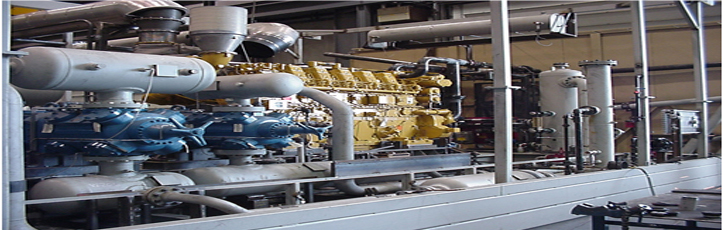
In industrial sectors such as petroleum refining, chemical synthesis, and power generation, pressure vessels often require stable, long-term operation under conditions involving moderate temperatures, high pressures, and even corrosive media. Conventional carbon steels are prone to issues such as insufficient strength, reduced toughness, or hydrogen-induced cracking under these operating conditions.
To address this challenge, the A302 Gr.A (also known as SA302 Grade A) low-alloy, high-strength steel plate—compliant with the ASTM A302/A302M standard—was developed specifically for use in welded boilers and pressure vessels.
A302 Gr.A steel plate is a manganese-molybdenum alloy steel; its key compositional elements include:
Carbon: 0.15%–0.20%, Manganese: 0.95%–1.30%, and Molybdenum: 0.45%–0.60%, with strict controls on impurity levels such as sulfur and phosphorus.
Manganese primarily provides solid-solution strengthening and improves hardenability, while molybdenum significantly enhances high-temperature strength and creep resistance; it also helps refine grain structure and improves resistance to hydrogen corrosion.
A302 Gr.A steel plates are typically supplied in the hot-rolled or normalized condition to ensure excellent overall mechanical properties. They feature a typical yield strength of at least 345 MPa and a tensile strength range of approximately 550–690 MPa, while maintaining sufficient elongation to ensure structural toughness.
After cutting and forming, A302 Gr.A steel plates are assembled via welding to construct the main bodies of pressure equipment such as reactors, heat exchangers, or storage tanks.
The excellent weldability of A302 Gr.A steel plates allows for the effective prevention of cold cracking and heat-affected zone (HAZ) embrittlement, provided that appropriate preheating and post-weld heat treatment (PWHT) are applied. Once in service, the steel plate—thanks to its stable microstructure—reliably withstands internal pressure loads within the medium-temperature range (typically defined as operating temperatures not exceeding approximately 450°C) while resisting corrosion from the process medium.
These steel plates are suitable for manufacturing critical pressure-bearing components of medium-temperature pressure vessels; they are particularly valuable for applications such as hydroprocessing reactors and fertilizer production equipment involving wet hydrogen or hydrogen sulfide environments. However, their use is subject to certain limitations: they are unsuitable for cryogenic or extremely high-temperature (e.g., exceeding 500°C) applications, and they demand rigorous welding procedures, requiring strict control over heat input and interpass temperatures.
To address this challenge, the A302 Gr.A (also known as SA302 Grade A) low-alloy, high-strength steel plate—compliant with the ASTM A302/A302M standard—was developed specifically for use in welded boilers and pressure vessels.
A302 Gr.A steel plate is a manganese-molybdenum alloy steel; its key compositional elements include:
Carbon: 0.15%–0.20%, Manganese: 0.95%–1.30%, and Molybdenum: 0.45%–0.60%, with strict controls on impurity levels such as sulfur and phosphorus.
Manganese primarily provides solid-solution strengthening and improves hardenability, while molybdenum significantly enhances high-temperature strength and creep resistance; it also helps refine grain structure and improves resistance to hydrogen corrosion.
A302 Gr.A steel plates are typically supplied in the hot-rolled or normalized condition to ensure excellent overall mechanical properties. They feature a typical yield strength of at least 345 MPa and a tensile strength range of approximately 550–690 MPa, while maintaining sufficient elongation to ensure structural toughness.
After cutting and forming, A302 Gr.A steel plates are assembled via welding to construct the main bodies of pressure equipment such as reactors, heat exchangers, or storage tanks.
The excellent weldability of A302 Gr.A steel plates allows for the effective prevention of cold cracking and heat-affected zone (HAZ) embrittlement, provided that appropriate preheating and post-weld heat treatment (PWHT) are applied. Once in service, the steel plate—thanks to its stable microstructure—reliably withstands internal pressure loads within the medium-temperature range (typically defined as operating temperatures not exceeding approximately 450°C) while resisting corrosion from the process medium.
These steel plates are suitable for manufacturing critical pressure-bearing components of medium-temperature pressure vessels; they are particularly valuable for applications such as hydroprocessing reactors and fertilizer production equipment involving wet hydrogen or hydrogen sulfide environments. However, their use is subject to certain limitations: they are unsuitable for cryogenic or extremely high-temperature (e.g., exceeding 500°C) applications, and they demand rigorous welding procedures, requiring strict control over heat input and interpass temperatures.