
View allProduct
View allHOT News
-
Executive Standard: SA299 Gr. B steel plates comply with the ASME standard, specifically ASTM A299/A299M.2026-08-26
-
SA299 is a carbon-manganese-silicon steel plate designed for pressure vessels—often referred to as "gas drum steel" under US standards.2026-08-19
-
ntroduction to SA299 Gr.A Steel Plate:
SA299 Gr.A is a steel plate grade designated for boilers and pressure vessels under American standards.2026-08-11 -
A285 Gr.C and SA285 Gr.C steel plates represent the same grade, though they are governed by different standards.2026-08-04
-
SA283 Gr.B is a low-to-medium strength carbon structural steel plate conforming to the American Society of Mechanical Engineers (ASME) standard.2026-07-31
Need advice, or a quote?
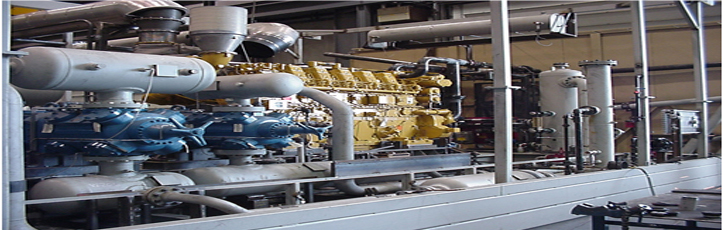
ASTM A202 Grade B is a chromium-manganese-silicon low-alloy steel tailored for high-pressure, medium-temperature pressure vessel applications. Its weldability is a core technical advantage, directly supporting efficient manufacturing of complex pressure equipment. This grade balances high strength with favorable welding characteristics, making it suitable for various industrial joining processes.
A key factor in its excellent weldability is the controlled chemical composition. With a carbon content of up to 0.25% and balanced additions of manganese, silicon, and chromium, the steel maintains a low carbon equivalent. This minimizes the formation of hard phases in the heat-affected zone (HAZ) during welding, significantly reducing the risk of cold cracking—a common issue in high-strength alloy steels.
Grade A202 Grade B is compatible with multiple welding methods, including shielded Metal Arc Welding (SMAW), Submerged Arc Welding (SAW), and Gas Tungsten Arc Welding (GTAW). No complex preheating or post-weld heat treatments (PWHT) are required for most thin-to-medium gauge plates, simplifying production workflows and lowering operational costs.
Post-weld performance further validates its weldability. The welded joints maintain strength matching the base metal, with good toughness and creep resistance retained in the HAZ. Strict controls over phosphorus and sulfur impurities also enhance weld integrity, reducing the likelihood of porosity and inclusions.
In summary, the outstanding weldability of ASTM A202 Grade B stems from its optimized chemistry, broad process compatibility, and stable joint performance. This makes it a cost-effective choice for fabricating high-pressure boilers, chemical reactors, and storage tanks, meeting the stringent demands of modern process industries.
A key factor in its excellent weldability is the controlled chemical composition. With a carbon content of up to 0.25% and balanced additions of manganese, silicon, and chromium, the steel maintains a low carbon equivalent. This minimizes the formation of hard phases in the heat-affected zone (HAZ) during welding, significantly reducing the risk of cold cracking—a common issue in high-strength alloy steels.
Grade A202 Grade B is compatible with multiple welding methods, including shielded Metal Arc Welding (SMAW), Submerged Arc Welding (SAW), and Gas Tungsten Arc Welding (GTAW). No complex preheating or post-weld heat treatments (PWHT) are required for most thin-to-medium gauge plates, simplifying production workflows and lowering operational costs.
Post-weld performance further validates its weldability. The welded joints maintain strength matching the base metal, with good toughness and creep resistance retained in the HAZ. Strict controls over phosphorus and sulfur impurities also enhance weld integrity, reducing the likelihood of porosity and inclusions.
In summary, the outstanding weldability of ASTM A202 Grade B stems from its optimized chemistry, broad process compatibility, and stable joint performance. This makes it a cost-effective choice for fabricating high-pressure boilers, chemical reactors, and storage tanks, meeting the stringent demands of modern process industries.