
-
Executive Standard: SA299 Gr. B steel plates comply with the ASME standard, specifically ASTM A299/A299M.2026-08-26
-
SA299 is a carbon-manganese-silicon steel plate designed for pressure vessels—often referred to as "gas drum steel" under US standards.2026-08-19
-
ntroduction to SA299 Gr.A Steel Plate:
SA299 Gr.A is a steel plate grade designated for boilers and pressure vessels under American standards.2026-08-11 -
A285 Gr.C and SA285 Gr.C steel plates represent the same grade, though they are governed by different standards.2026-08-04
-
SA283 Gr.B is a low-to-medium strength carbon structural steel plate conforming to the American Society of Mechanical Engineers (ASME) standard.2026-07-31
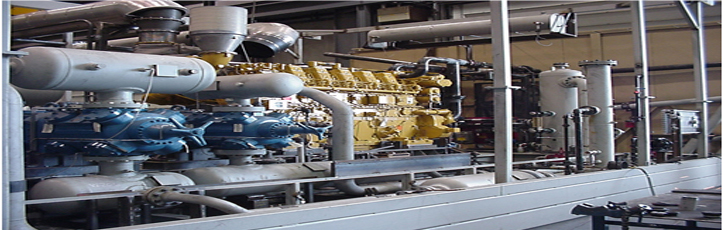
The P235GH steel plate is a steel material with excellent comprehensive properties, boasting a wide range of applications, particularly in fields requiring high strength, good plasticity, and toughness. Below is a detailed introduction to the application scope of P235GH steel plates and their yield strength (Yield Strength):
Overview of P235GH Steel Plate
Chemical Composition: The chemical composition of P235GH steel plates primarily includes carbon (C), silicon (Si), manganese (Mn), phosphorus (P), sulfur (S), and a small amount of alloy elements. The specific contents are as follows: carbon (C) ≤ 0.16% (some sources indicate ≤ 0.20%), silicon (Si) ≤ 0.35%, manganese (Mn) 0.60~1.20% (some sources indicate ≤ 1.45%), phosphorus (P) ≤ 0.025% (some sources indicate ≤ 0.035%), and sulfur (S) ≤ 0.010% (some sources indicate ≤ 0.035%). Additionally, it may contain trace amounts of chromium (Cr), nickel (Ni), copper (Cu), molybdenum (Mo), vanadium (V), niobium (Nb), nitrogen (N), aluminum (Al), titanium (Ti), and other elements.
Mechanical Properties: P235GH steel plates exhibit high strength, plasticity, and toughness. Depending on the thickness of the steel plate, its yield strength ranges between 200~235 MPa (some sources indicate a range of 215~265 MPa or a minimum yield strength of 235 MPa). The tensile strength ranges from 360~480 MPa, with an elongation after fracture greater than 24%. The impact absorption energy has different requirements at different temperatures, for example, being greater than 40J at 20°C.
Application Scope
Due to its excellent properties, P235GH steel plates are widely used in multiple fields, including but not limited to:
Petrochemical Industry: Used for manufacturing key components such as pressure vessels, storage tanks, pipelines, and heat exchangers. These components need to withstand high pressure, high temperatures, and the erosion of corrosive media, thus requiring materials with high strength, good toughness, and corrosion resistance.
Power Station Boilers: Used for manufacturing components such as heating surfaces, steam drums, headers, and pipelines of boilers. These components need to withstand the erosion of high-temperature and high-pressure steam and water, thus requiring materials with excellent heat resistance and strength.
Shipbuilding Industry: Can be used for manufacturing hull structures and ship pipelines. Ships need to withstand the impact of wind and waves and the corrosion of seawater during navigation, thus requiring materials with high strength, good toughness, and corrosion resistance.
Machinery Manufacturing: Can be used for manufacturing heavy machinery and pressure vessels. These equipment need to withstand heavy loads and complex stress applications, thus requiring materials with high strength and good toughness.
Bridge Construction: Can be used for manufacturing support structures and bridge decks of bridges. Bridges need to withstand the loads of vehicles and pedestrians as well as the erosion of the natural environment, thus requiring materials with high strength and good durability.
Application of Yield Strength
Yield strength is one of the important mechanical properties of P235GH steel plates, reflecting the material's resistance during the initial stage of plastic deformation. When manufacturing equipment or components in the aforementioned fields, yield strength serves as an important reference for design and material selection. By reasonably controlling the yield strength of P235GH steel plates, it can be ensured that the equipment or components have sufficient strength and stability when subjected to loads, thereby meeting usage requirements and ensuring safety.
In summary, P235GH steel plates have a wide range of applications, particularly in fields requiring high strength, good plasticity, and toughness. As one of the important mechanical properties, yield strength plays a crucial role in the process of design and material selection.